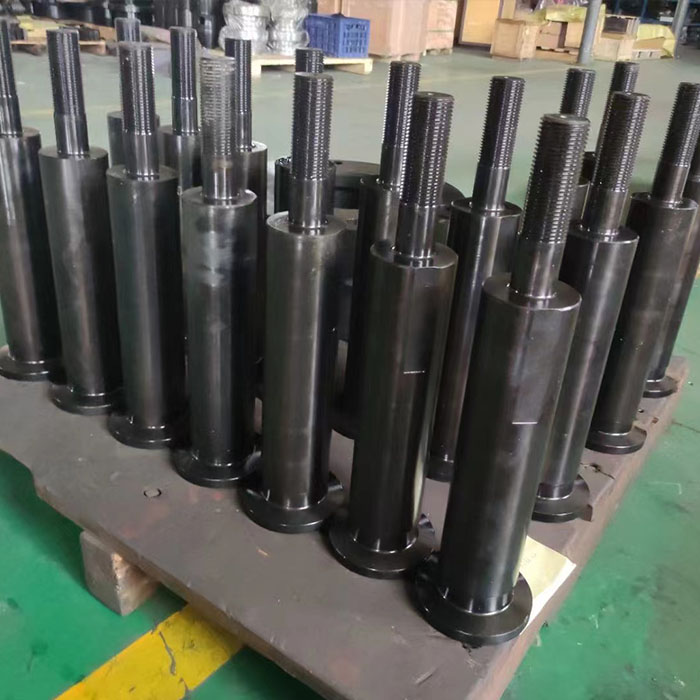
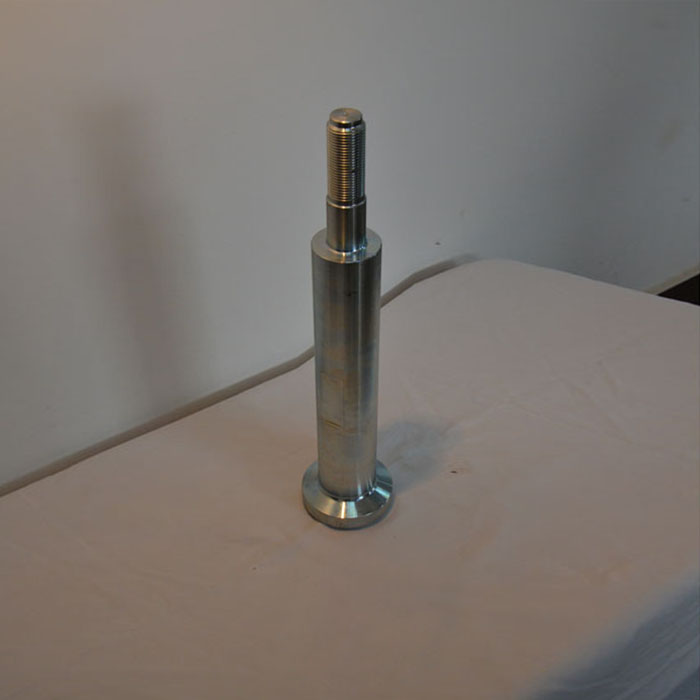
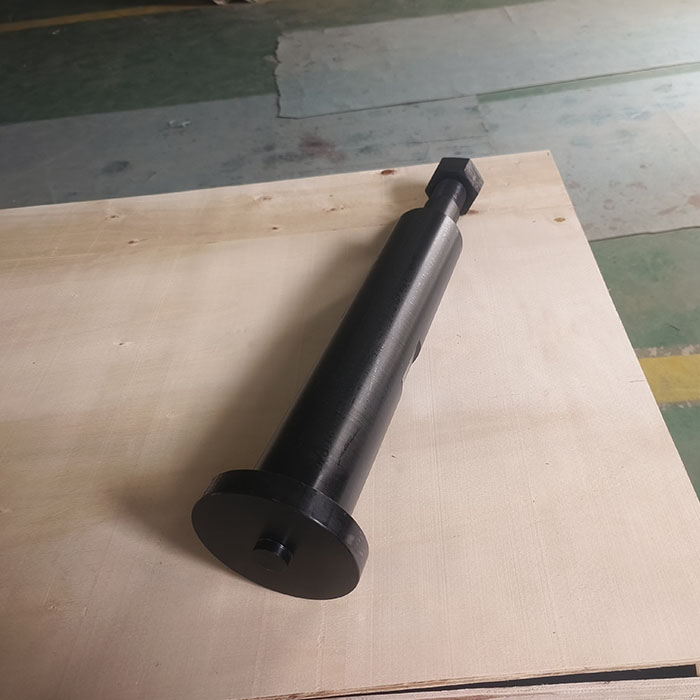

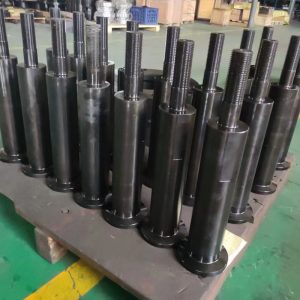

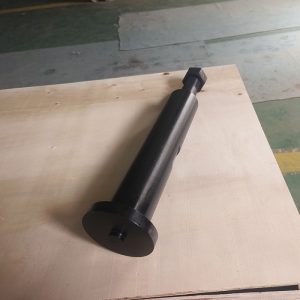
In the global oil drilling industry, the mud pump is widely regarded as the “heart” of the drilling rig. Among its critical components, the piston rod (Piston Rod) stands out as one of the most important and frequently replaced wear parts in the fluid end (Mud Pump Fluid End). It directly impacts pump efficiency, reliability, and overall operating costs. According to API Spec 7K standards and international field experience, a high-quality piston rod can significantly reduce non-productive time (NPT) and help operators save tens of thousands of dollars in maintenance expenses.
Mud Pump Piston Rod
1. Function and Working Principle of the Mud Pump Piston Rod
The piston rod is the core connecting element between the power end (Mud Pump Power End) and the fluid end (Fluid End):
- It transmits the reciprocating linear motion from the Mud Pump Crosshead (or pony rod/extension rod) to the piston.
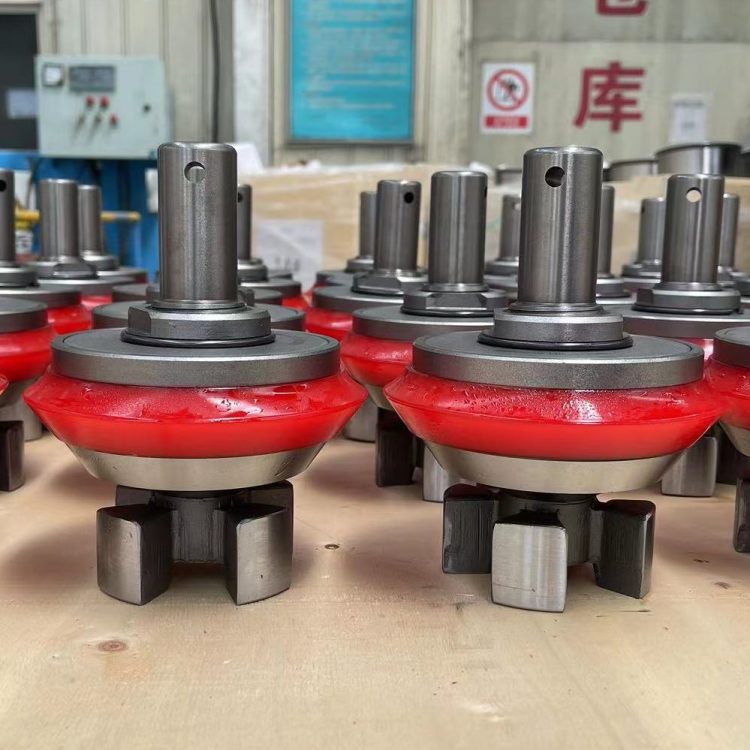
- It drives the piston back and forth inside the Mud Pump liner, enabling suction and discharge of high-pressure drilling mud.
- It withstands millions of high-frequency cycles, side friction forces, and exposure to abrasive, corrosive drilling fluids (sand, salt, acids).
Triplex pumps use 3 piston rods; quintuplex pumps use 5. As a high-load consumable part, the piston rod directly determines discharge stability, pressure consistency, and overall pump life.
Mud Pump Piston Rod
2. Typical Structure Features of the Piston Rod
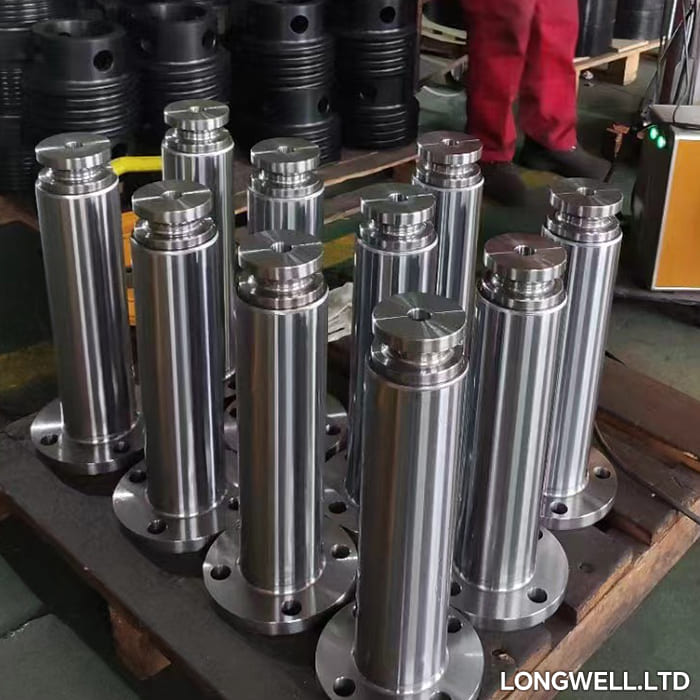
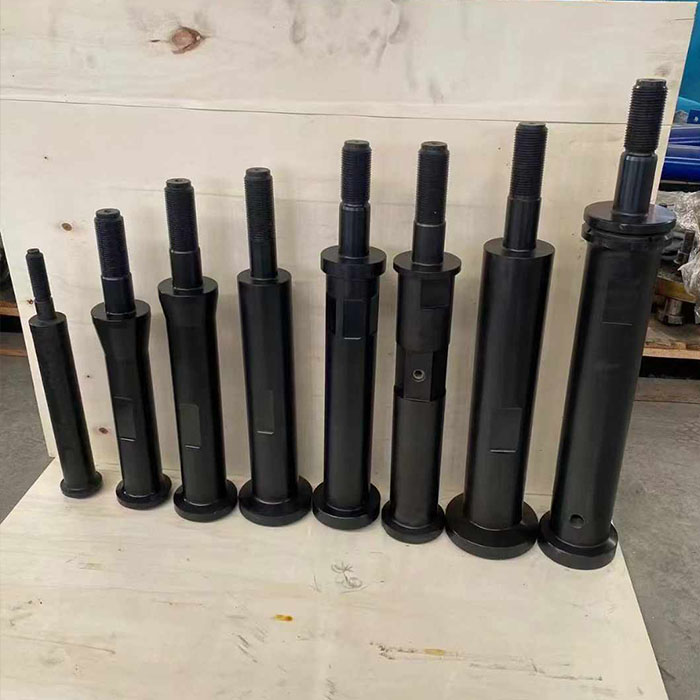
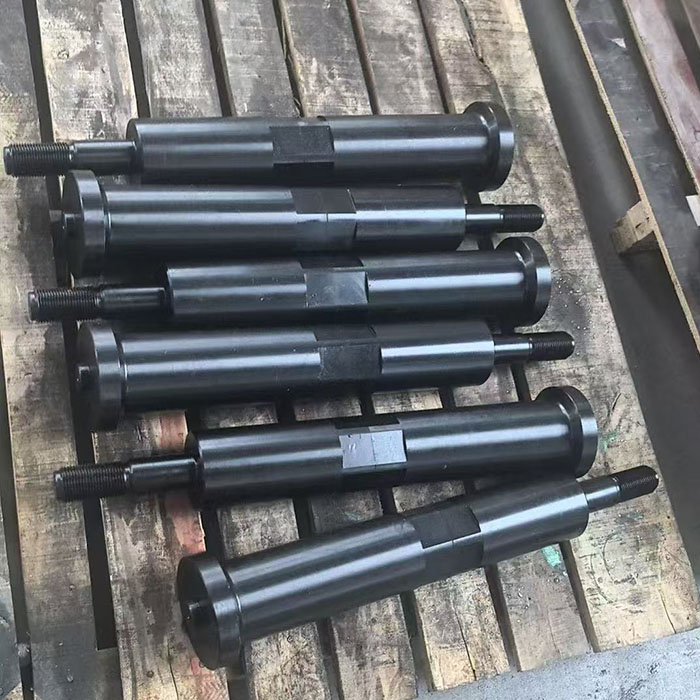
API-standard mud pump piston rods feature a stepped, precision-forged design:
- Large End (Power End Side): Thicker section with threads + double clamp grooves for quick connection to the crosshead or pony rod.
- Shaft Body: Slender cylinder (length typically 1–2 meters), with high surface finish (Ra ≤ 0.4 μm) to minimize wear on the stuffing box.
- Small End (Fluid End Side): Threaded to secure the piston, often with piston nut, retainer plate, or locating key.
- Sealing Zone: Works in conjunction with the stuffing box to prevent mud leakage.
F-series (F-500 to F-2200) and 3NB-series pumps share highly compatible interfaces, enabling fast field replacement.
Mud Pump Piston Rod
3. Common Materials and Surface Hardening Technologies
To withstand extreme conditions (high pressure, high sand content, high temperature/corrosion) across global oilfields, piston rods use:
- Base Material (most common): 35CrMo or 42CrMo alloy steel (forged), tensile strength ≥1080 MPa, quenched & tempered hardness 28–32 HRC.
- Surface Treatments (critical for durability):
- Hard Chrome Plating: Thickness 0.05–0.1 mm, hardness HRC 60+, most widely used, excellent wear and corrosion resistance.
- Induction Hardening or Plasma Spray Nickel-based Alloy: Premium options, surface hardness HRC 55–65, thicker wear layer.
- Emerging options: Nitriding or ceramic-composite coatings (increasingly popular for enhanced sand erosion resistance).
High-quality rods feature flawless, pit-free surfaces that can extend stuffing box and liner life by 30–50%.
Mud Pump Piston Rod
4. Common Failures and Root Causes (Global Field Insights)
Piston rod failure remains one of the leading causes of mud pump downtime:
- Surface scoring / chrome flaking → Sand particles enter the stuffing box, causing rapid packing failure and leakage.
- Bending / fatigue fracture → Misalignment + repeated high stress leads to piston eccentricity and accelerated liner wear.
- Thread damage → Improper torque during installation causes piston loosening or detachment.
- Corrosion pitting → High-salinity or acidic mud attacks the plating (common in Middle East and North Sea operations).
These issues often result in pressure fluctuations, reduced flow rate, or complete pump shutdown.
Mud Pump Piston Rod
5. Maintenance Best Practices and On-Site Replacement
- Routine Inspection: Check rod surface for scoring or plating loss every shift; measure diameter wear (replace if >0.2–0.3 mm).
- Installation Tips: Apply anti-seize lubricant or grease; ensure perfect alignment; use torque wrench per API specifications.
- Replacement Procedure (double-clamp design example):
- Stop pump and relieve pressure.
- Remove clamps and withdraw rod.
- Inspect liner and packing.
- Clean interfaces, install new rod.
- Test pump and monitor for leaks.
- Typical Service Life: 800–1500 hours average; premium rods can reach 1500–2500+ hours depending on mud quality and pressure.
6. Global Procurement Guide: How to Select a Quality Piston Rod
Always prioritize API 7K certified products compatible with major international pump models:
- Leading Suppliers: BOMCO (Baoji Oilfield Machinery), Honghua, NOV (National Oilwell Varco), Emsco, Gardner Denver, LONGWELL, etc.
- Common Part Numbers: AH36002-05, AH1301020504 (widely used in F-series).
- Selection Tips:
- Match exact pump model and liner bore size (e.g., F-1600 requires corresponding spec).
- Prefer hard chrome or plasma-sprayed surfaces.
- Require forged billet (no welds), full material certs, hardness reports, and NDT (non-destructive testing) documentation.
If you need quotes, compatibility lists, or troubleshooting advice for specific models (F-1600, 3NB-1600, etc.), or have details about your pump type, operating conditions, or region, feel free to provide more information—I can offer precise global sourcing and optimization recommendations!